90 years of firsts on the American curb.
From the most popular mass-produced mechanical meter in 1936 to the first curbside convenience-hub SpaceMaster in 2026 — the lineage that shipped more parking meters than any company on earth.
Nine decades of firsts on the curb.
From the most popular mass-produced mechanical parking meter in 1936 to today’s automated curb — mobile payments, in-vehicle integration, sensors, LPR, lane automation, electronic locks. Innovation has been continuous, and the U.S. patent record carries the proof. Below: the milestones, in order.
Most popular parking meter in the world
Donald Duncan introduces single-space mechanical meters. Over the next decades the company will ship more parking meters than any other manufacturer on earth — the Model 70, 76, 80, 90 and 95 housings still in daily service across thousands of cities.

Replaceable mechanism — reuse the housing
Pioneered the replaceable parking meter mechanism, allowing cities to reuse housings as the technology inside evolved. The same idea that today lets an LNG slide onto a Model 95 from 1955 began here.

First automated handheld enforcement
Invented one of the first automated handheld enforcement devices to issue electronic parking and traffic citations. The ancestor of every handheld on every street today.

EPM — the Electronic Parking Meter
Launches EPM (Electronic Parking Meter) with first digital display and optical coin recognition. The mechanical curb becomes the digital curb.

AutoParq — in-car parking meter
Launches AutoParq, the in-car parking meter with stored value. The motorist’s own dashboard becomes a meter session.

Eagle series — fully electronic, programmable
Launches the Eagle series of fully electronic, programmable meters using infrared communications to support data collection and management. The first generation of meters the central office could actually talk to.

VX pay-by-space multi-space meter
The VX pay-by-space meter was deployed on U.S. streets — among the first parking meters in the U.S. to use green technologies and accept credit card payments. Long before sustainability was a procurement category: no receipts, non-toxic batteries, durable stainless steel housings.

Wireless single-space meter
Implemented wireless communications in a single-space parking meter. The meter no longer needs to be physically visited to be read or reprogrammed.

Proprietary handheld with camera and voice recording
Designed proprietary handhelds with camera and voice recording — long before smartphones made these portable technologies ubiquitous. Evidence capture goes from paper to digital.

Credit card payments in a single-space meter
Accepted credit card payments in a single-space parking meter. The coin monopoly at the curb ends.

mPark — mobile phone payments
Launched mPark mobile phone payments service in the US, displaying payments on multi-space parking meters. The phone becomes a meter.

Online violation images for motorists
Allowed motorists to view millions of parking violation images online to reduce appeals and city workload. Transparency at the curb, before transparency was a procurement requirement.

Patented radar-based vehicle detection sensors
Developed and patented high-accuracy, low-power, low-latency radar-based vehicle detection sensors deployable in various configurations, communicating using the latest IoT wireless technologies, and able to read smart permits.

AutoISSUE on modern smartphones
Latest release of AutoISSUE handheld enforcement software leverages the power of modern smartphones to unleash officer productivity. The handheld becomes a tablet; the tablet becomes a smartphone.

Liberty Next Gen smart meter
“Liberty Next Gen” smart meter delivers improved performance and affordability to allow any city to accept credit cards. Single, Dual, Multi and Coin-Only configurations — every one drop-in compatible with 80+ years of housings.

Multi-modal sensors for truck and motorcycle parking
Deployed multi-modal sensors to manage truck and motorcycle parking. The curb is no longer one-size-fits-all on detection either.

Automated smart parking
CivicSmart introduces a groundbreaking automated smart parking solution bound to transform the way on-street parking is managed and evaluated in the future. Detect, classify, capture, act — without an officer standing next to the car.

LaneMaster — Automated Lane Management
One mounted device with cameras for each direction, solar and wireless, managing an entire lane — parking lots, curb lanes. Available in solar and hardwired configurations. Drives the collections workflow directly.

SpaceMaster — one device, multiple uses
The single-space meter becomes a sculptural curbside hub: meter, sensor, LPR, dynamic signage, wayfinding publisher, and merchant-validation terminal — all in one form factor. Single, Dual, Quad and Multi-Space configurations.
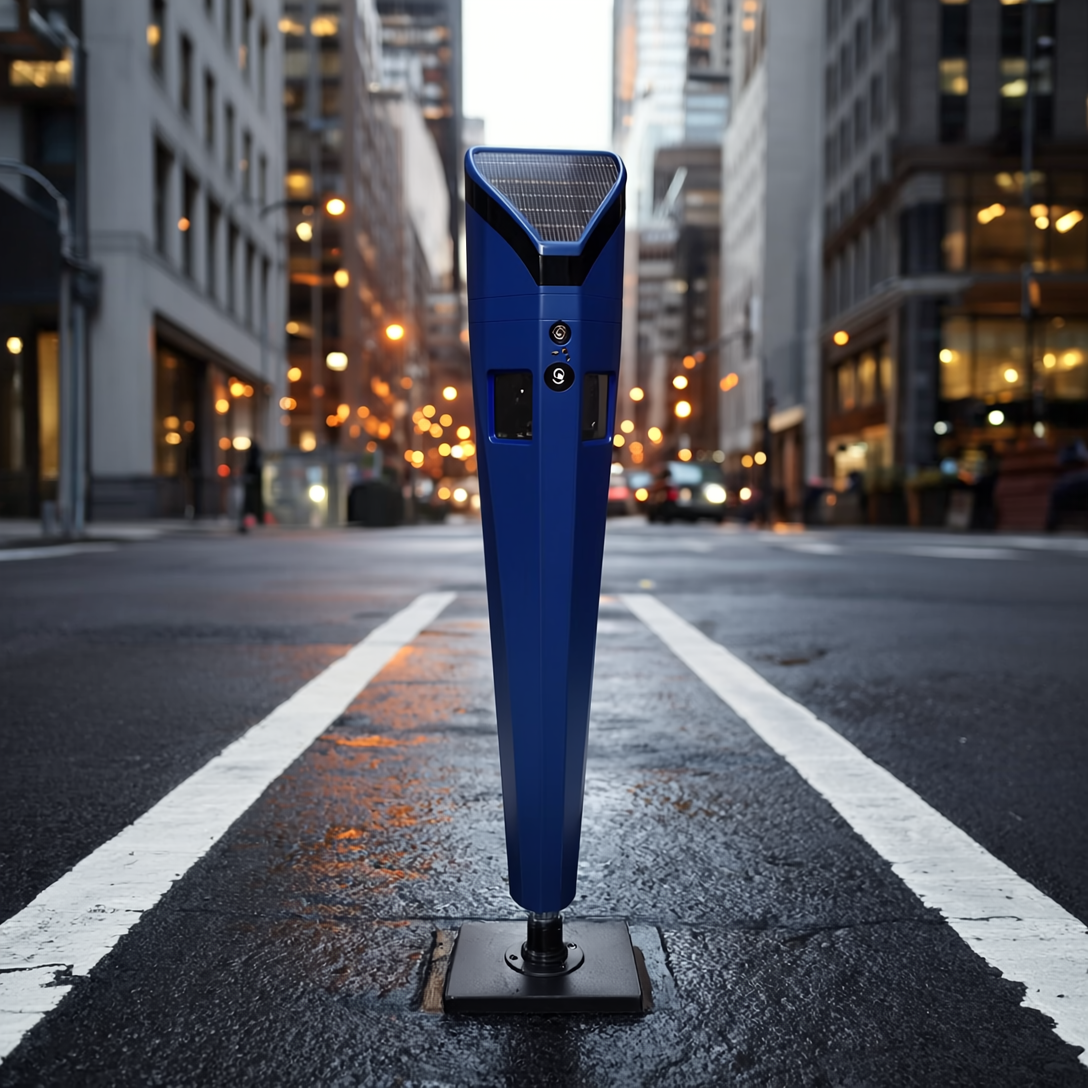
Electronic Locks — Bluetooth-authorized key management
Replaces the mechanical lock in every housing with Bluetooth-authorized electronic locks. One key per technician, paired to their phone, daily route-restricted authorization, complete chain of custody from meter to coinbox.
Our corporate lineage, in plain terms.
CivicSmart Parking Technologies, Inc. (CPTI) is a wholly owned subsidiary of CivicSmart, Inc., formerly known as Duncan Parking Technologies, Inc. (DPTI). CivicSmart, Inc. acquired DPTI from Duncan Solutions in 2015 and renamed it CPTI. DPTI is the descendent of the original Duncan parking-meter company, started in 1936. From 2005 until the CivicSmart acquisition, DPTI was a subsidiary of Duncan Solutions. CivicSmart, Inc. is a separate company from Duncan Solutions.
A few of the things we’re proud of.
More parking meters shipped than anyone else
Over 15 million parking meters shipped across our lineage since 1936 — likely more curb meters sold than any other manufacturer in history.
First handheld enforcement
AutoCITE (1986) was the first ruggedized handheld citation computer — the ancestor of every handheld device on every street today.
Ninety uninterrupted years
Continuous innovation and support across four legacy companies. Every generation drop-in compatible with the one before.
Drop-in, always
Every new generation has been drop-in compatible with prior housings and vaults — because the fastest way to modernize a curb is to not pour new concrete.
The next chapter is being written on your street.
Whether you’re adding a meter to one new block or modernizing 5,000, the 90-year lineage is on your side.