The future of parking starts at the curb.
Your curb is community infrastructure — the most leveraged real estate your city manages. CivicSmart helps cities unlock its full community value with a connected platform across all four layers: smart hardware at the space, real-time intelligence on every event, predictable and fair enforcement, and the operations system that ties them together. The result is more turnover for merchants, more curb-adjacent commerce, more sales tax to the treasury, and public trust in a system that finally works for everyone who uses it.
Six lanes. One curb.
Classic, Modernistic, Automated, Patrol, Legacy, Intelligence — every form factor the curb needs, on one connected platform.
Explore products Interactive simulatorWhat’s your curb worth?
Tune the levers on your own district — policy, time limits, enforcement, signage — and watch curb commerce, sales tax, meter revenue and motorist trust update live.
Try the simulator The geometry of parkingThe sign is already behind you.
By the time the driver sees the open space, the regulatory sign is in the rear-view mirror. The decision window isn’t short. It’s empty.
Read the caseThe curb is broken — for everyone.
Nobody wins under the current curbside status quo. Cities manage blind. Motorists are frustrated. And revenue and commerce slips through gaps no one can see.
High friction at the curb
The sign is already behind the driver. Rampant safety violations — fire lanes, crosswalks, ADA spaces. Enforcement that feels like a bad-luck lottery. Honest drivers turn into accidental violators because the rules weren’t visible at the moment of decision.
Commerce left on the table
For a 5,000-space downtown, every missed turnover is roughly $100–$200M in unrealized annual commerce and $5–$15M in unrealized sales tax. Most of that gap is information at the decision point, not anything more exotic.
“Asset-light” experiments that aren’t
Strip the hardware off the curb and the only signal that says “this is a legal space” goes with it. Compliance drops. Fire lanes fill up. The city ends up with the worst of both worlds: complex rules and no way to read them at the curb.
Remove the meter and you remove the signal. App-only and kiosk-only schemes are sold as convenience, but nobody thinks a half-block walk to a kiosk is convenient. They erase the curb signal that tells a driver in motion “this is a legal space, here are the rules” — the one part of the system that addresses the 2-second commit window. They also disadvantage cash-only, unbanked and non-smartphone drivers.
Seven product lines. One integrated system.
From the meter at the space to the citation on the officer’s screen — every layer engineered to work with every other, out of the box.
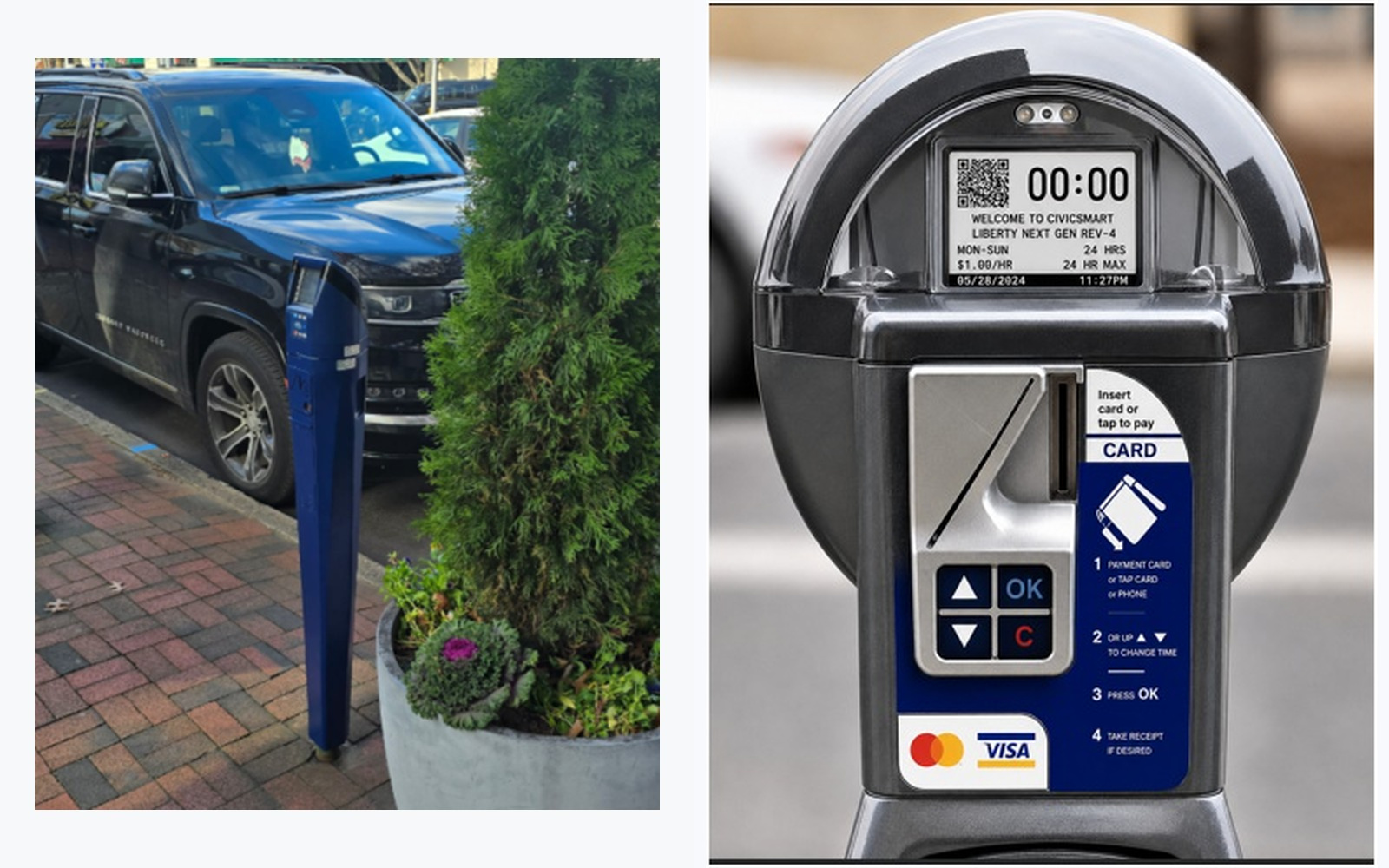
Curbside Hardware
LNG (Classic) and SpaceMaster (Modernistic) — single-space and multi-space meters with integrated sensor options.
Explore hardware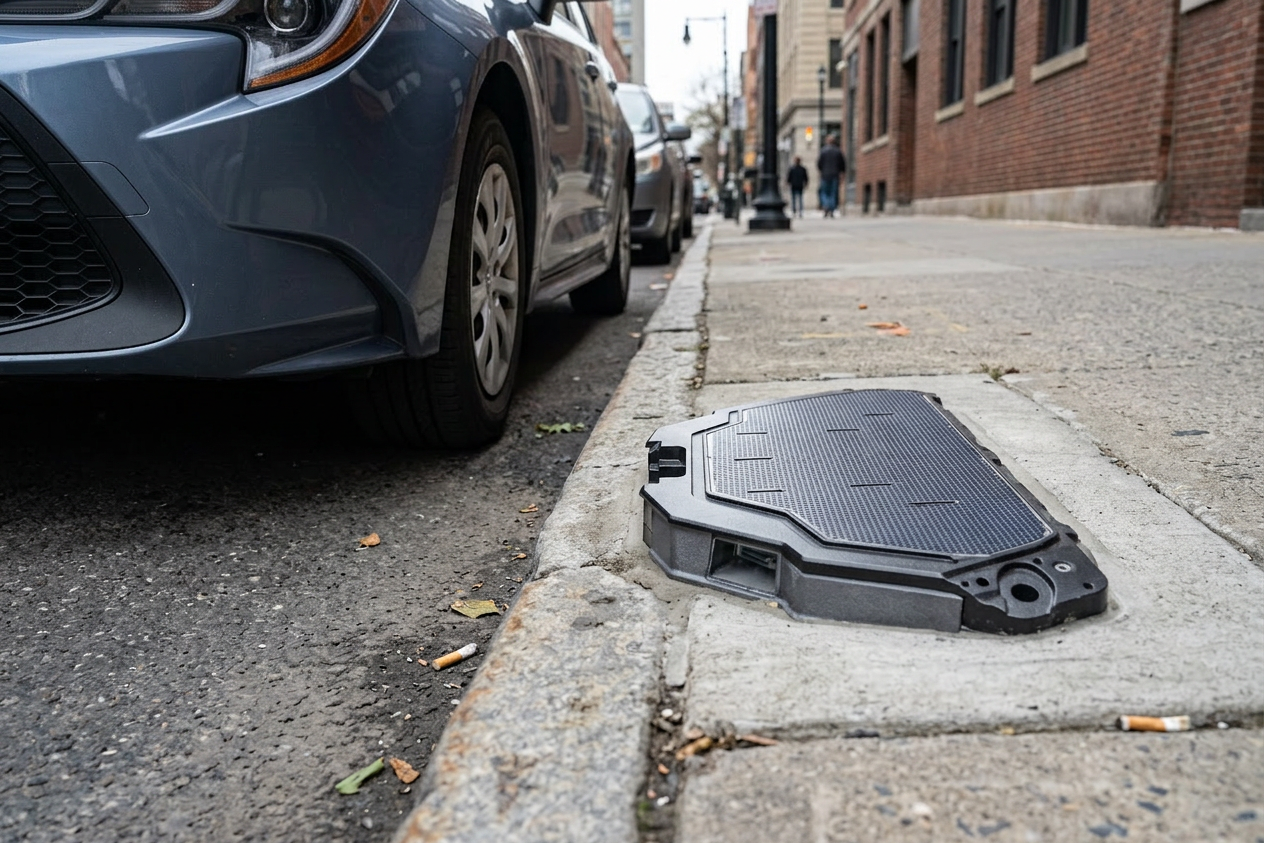
Curbside Intelligence
SpaceMaster integrated sensors and CurbMaster dedicated curb sensors. Real-time occupancy, plate capture, evidence-grade detection.
See curb sensing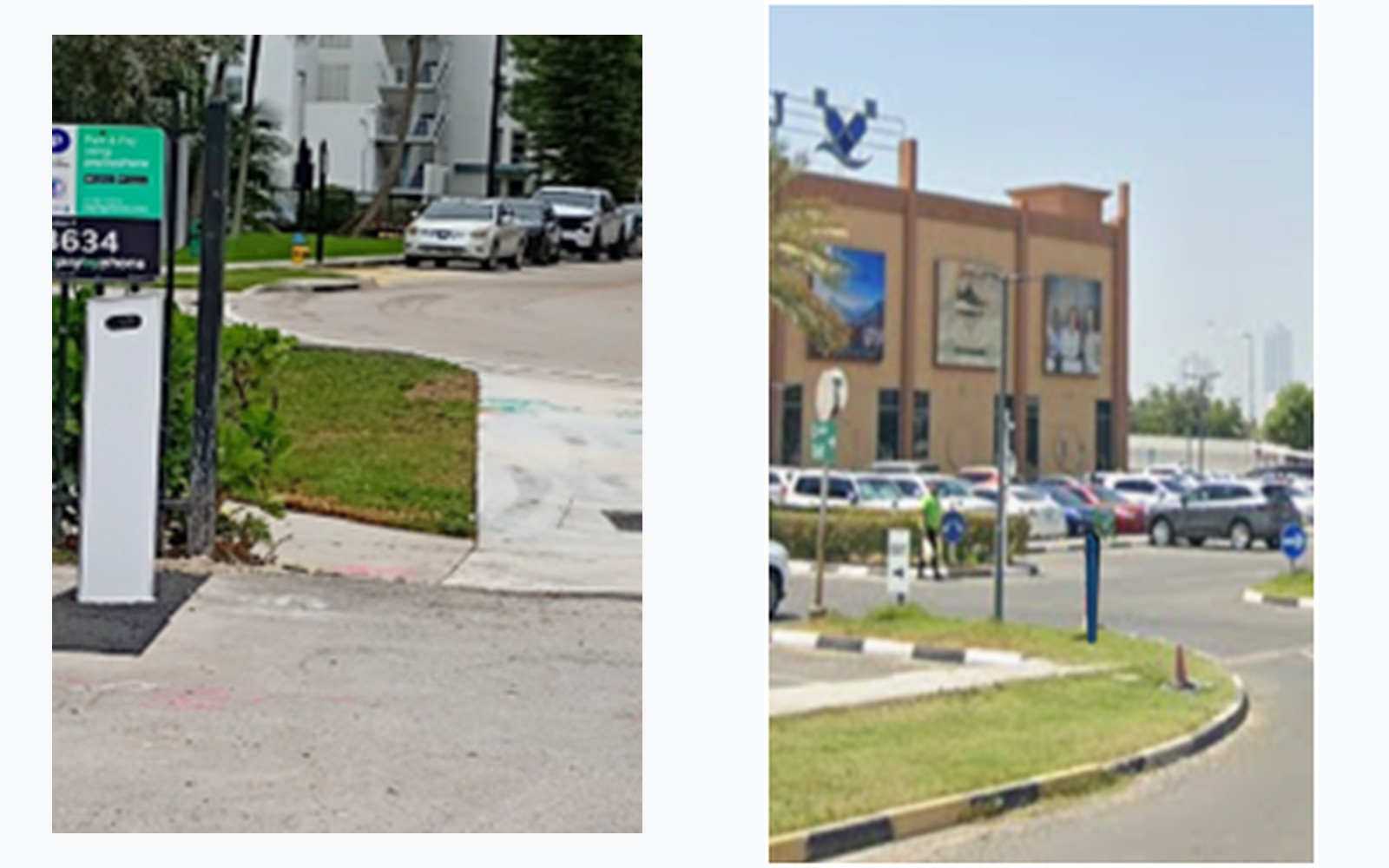
Lane Management
LaneMaster and LaneMaster Solar — automated lane management for loading, pickup-dropoff, rideshare and commercial corridors.
See lane management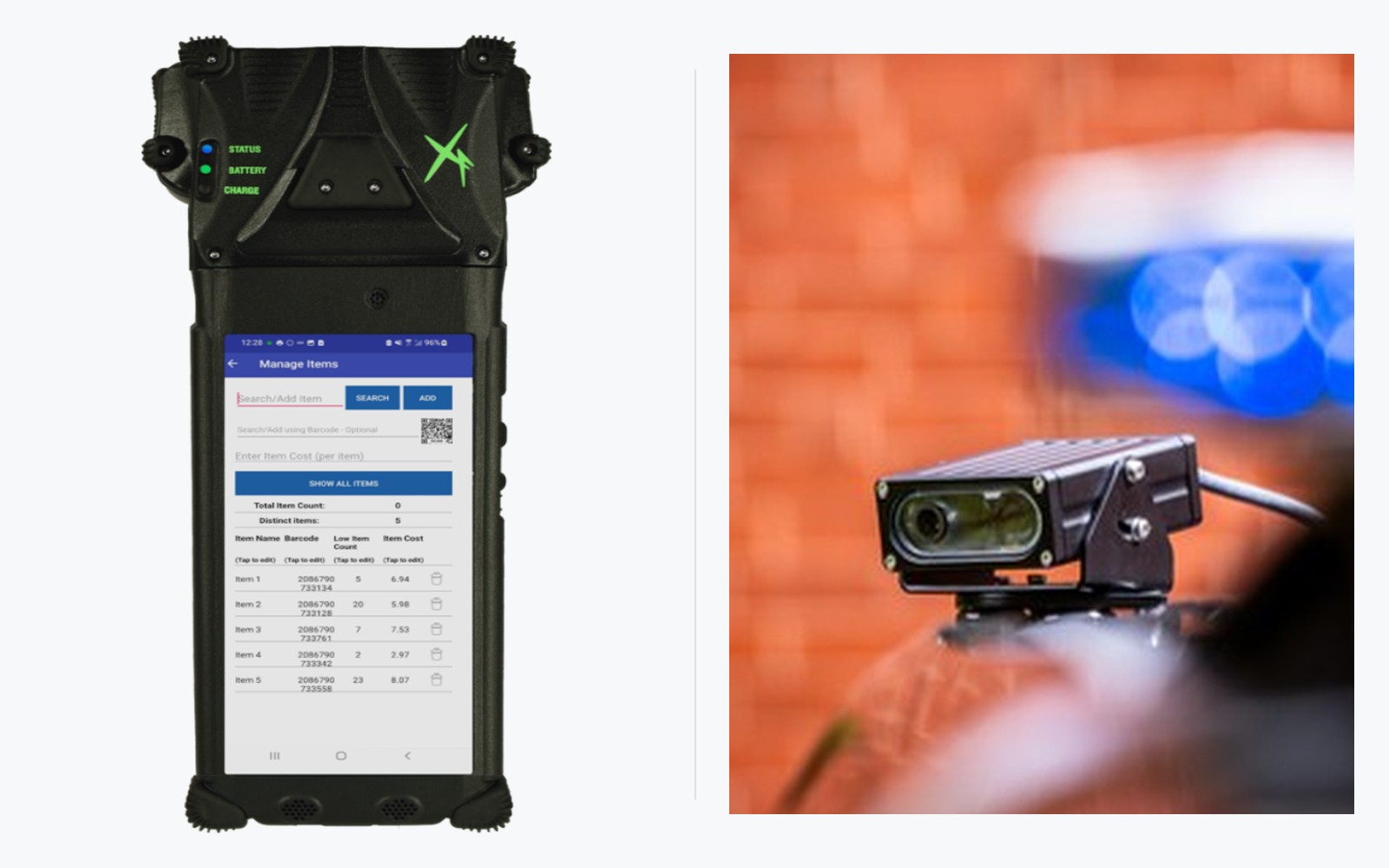
Enforcement
AutoISSUE handhelds for officers on the beat. Guided enforcement (35–50% capture) upgrades to full automation (80% capture) when the city is ready.
See enforcement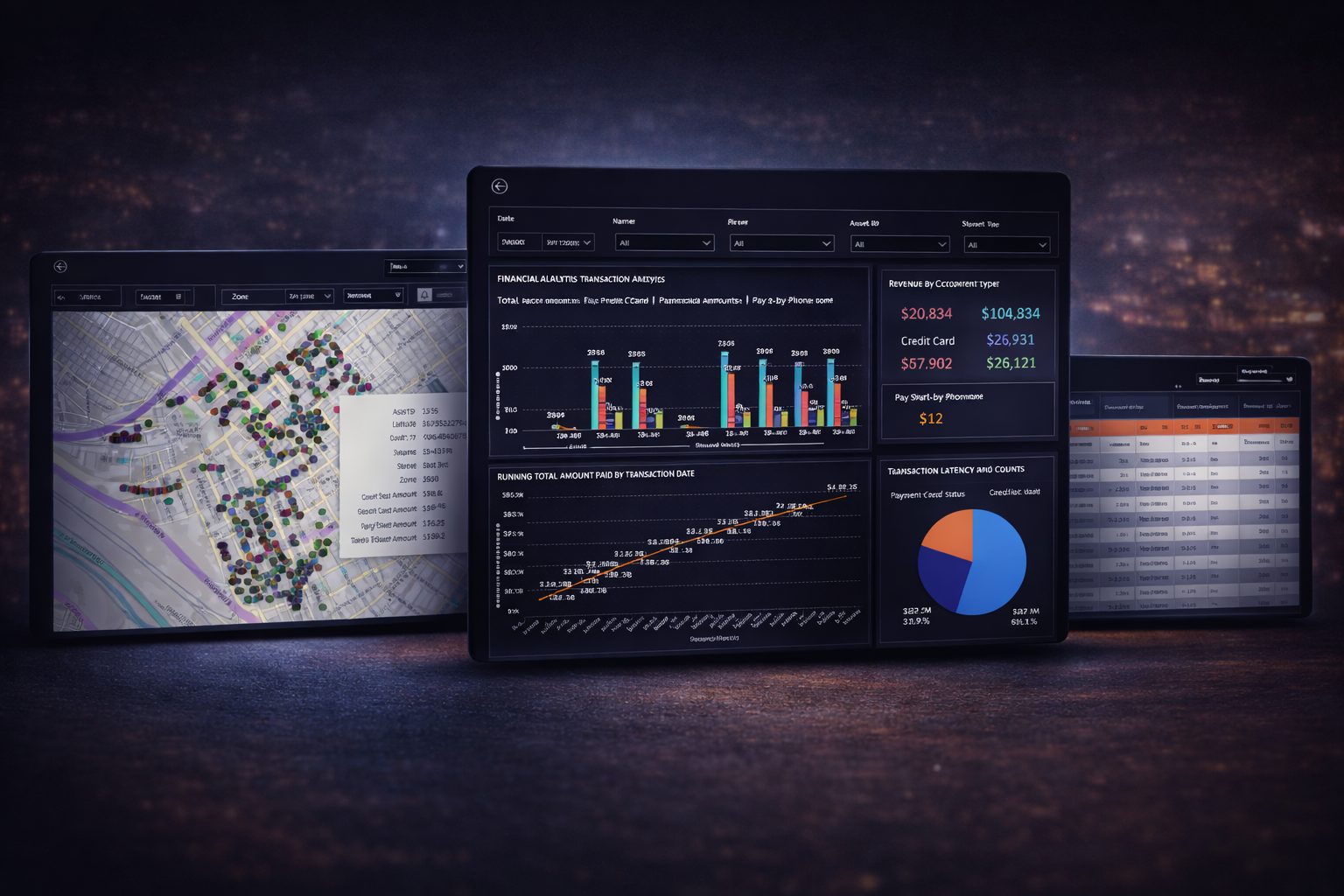
Business Intelligence
PEMS unifies every meter, sensor, handheld and citation into one dashboard — live Power BI reporting, open REST API, AI decision support.
See the platform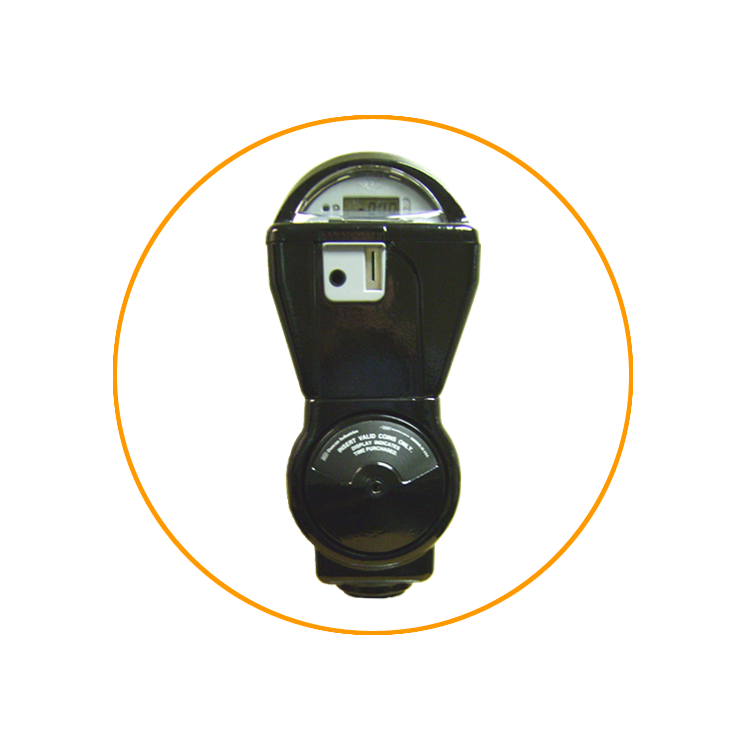
Legacy Housings & Parts
Eagle coin-only meters and Model 70/76/80/90/95 iron housings — parts-serviceable and still in production.
See Legacy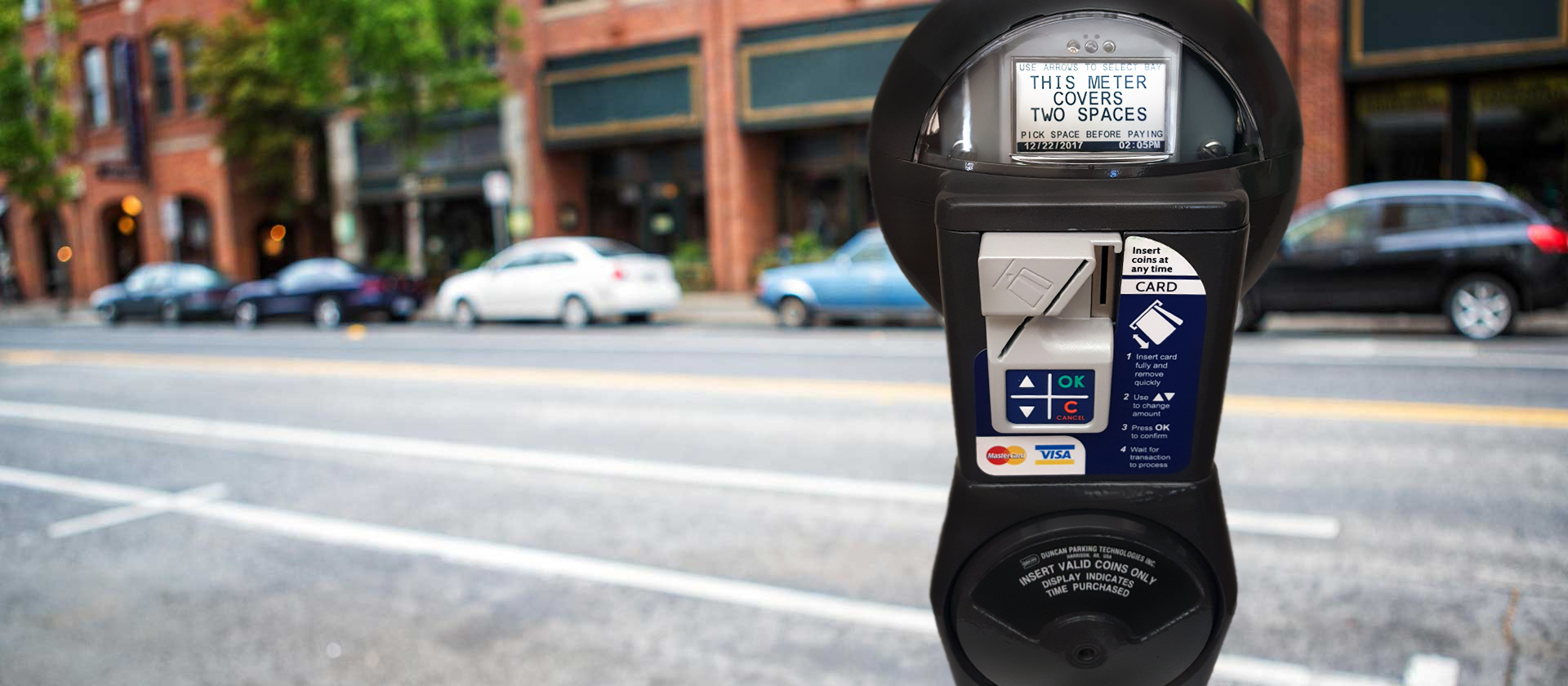
Curb Management Program
We help you design a curb program: policy, MUTCD-aligned signage, grace-period rules, fair enforcement and economic-value analysis.
Our philosophyBuilt for every operator. Every environment.
Municipalities
Downtown districts, residential permit zones, district-wide enforcement — unified control and real-time visibility.
Universities & campuses
Permit zones, ADA, loading and visitor parking — managed without expanding the parking services team.
Airports & transit hubs
Rideshare zones, cell lots and passenger loading — keeping curb flow safe, efficient and revenue-generating.
Hospitals & healthcare
Emergency access lanes, patient drop-off and valet — protected with continuous automated monitoring.
Private operators
Surface lots, garages and mixed-use developments — maximize revenue and compliance across every asset.
Downtown districts
Loading windows, delivery, short-term and retail access coordinated in high-density commercial corridors.
Different streets. Different form factors.
A downtown entertainment corridor is not a residential permit zone. An airport cell lot is not a hospital drop-off loop. CivicSmart gives you the right form factor for every curb — and they all share one data platform.
Single-space drop-in
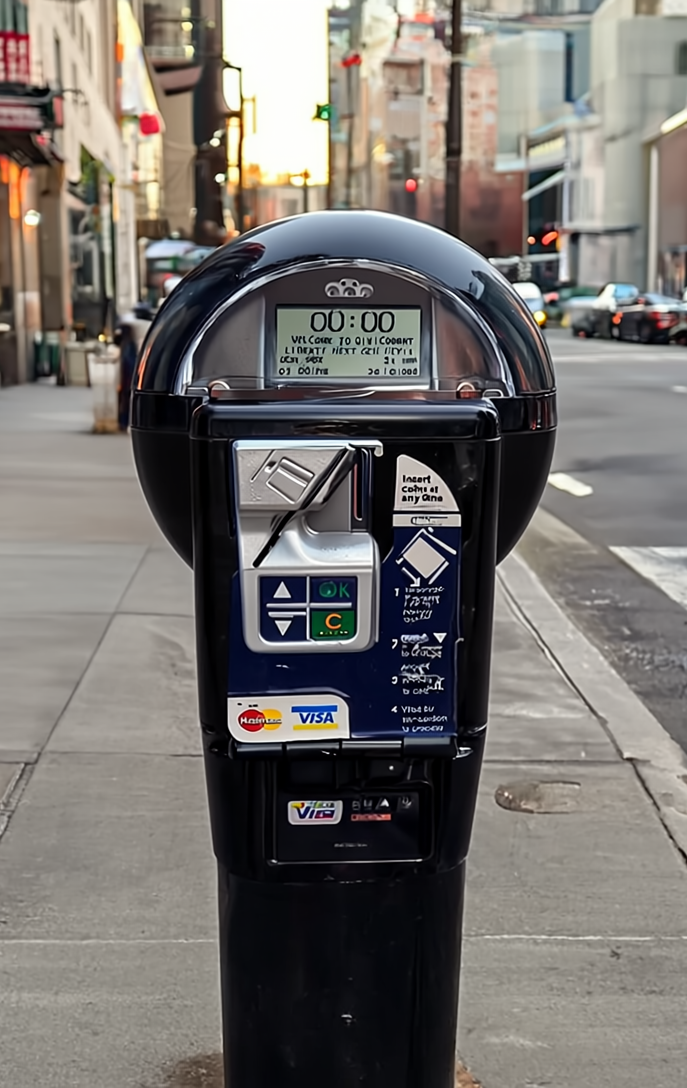
LNG on existing Eagle housings. No new concrete. No new permits. Live in hours.
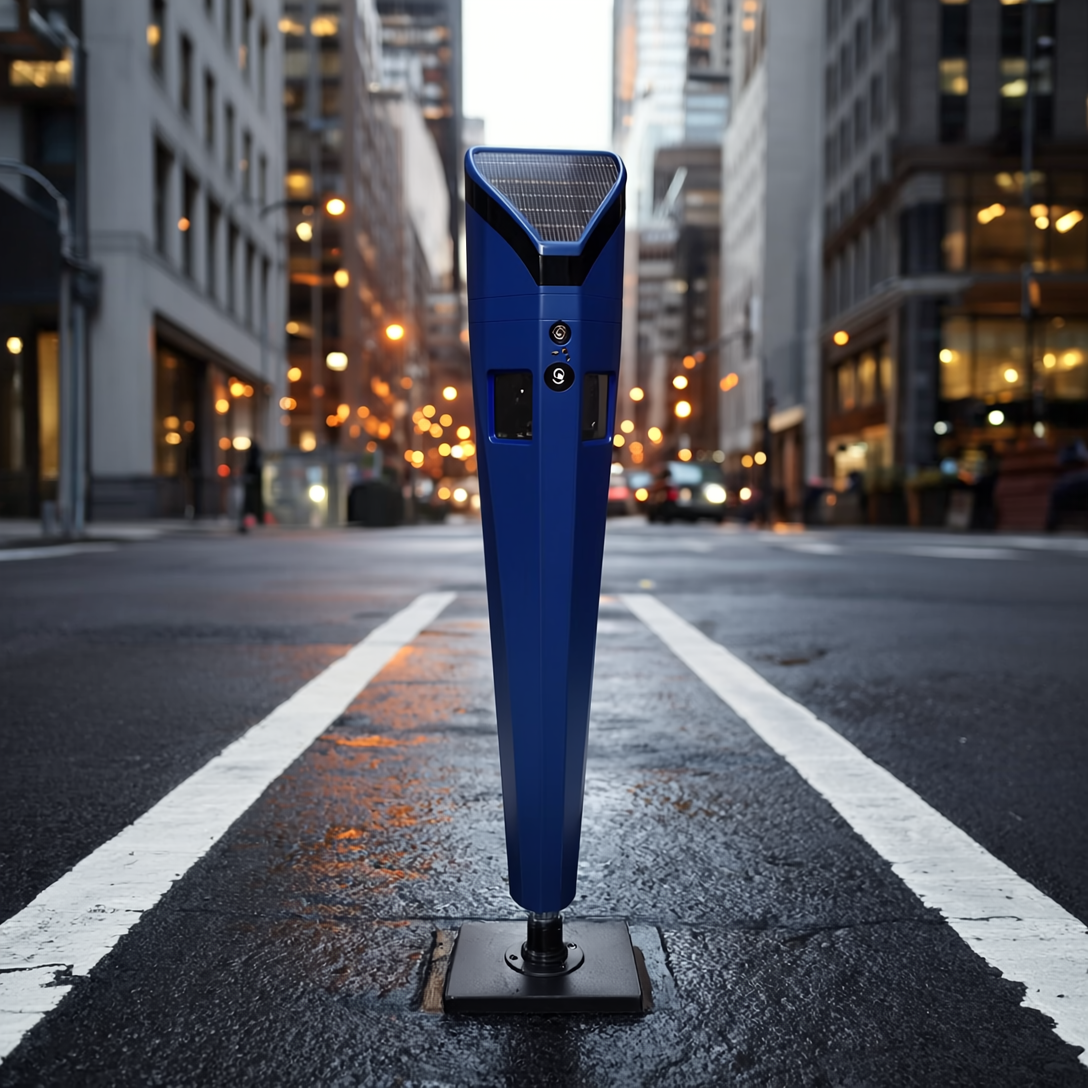
Sculptural hub
SpaceMaster for flagship corridors where the streetscape is part of the brand. Single, Dual, Quad and Multi.
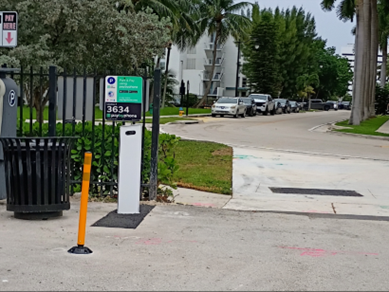
At-lane
LaneMaster monitors entire lanes — Solar-wireless or Hardwired, deploy the configuration that fits the site.
Curb sensor
CurbMaster flush-mounts to the curb line itself — for loading zones, fire lanes and hydrant zones where a meter head isn’t the fit.
Set policy. Communicate it. Make compliance easy. Enforce fairly.
A good curb works in a specific order, and the order matters as much as any single step. Skip step 2 or step 3, and steps 1 and 4 stop working — you end up with policies no one understands and enforcement that feels arbitrary. Cities that execute the four steps in sequence collect more commerce, more sales tax, and more public goodwill from the same physical curb.
Set policy optimally
Time limits and rates calibrated to each block’s role and demand pattern. Rates alone don’t enforce turnover — time limits do.
Communicate where the decision happens
At the space, not at the corner. In formats a driver in motion can read. The meter at the space is itself part of the answer — the only signal that addresses a driver before they’ve committed.
Compliance at the point of use
Payment is available where the car is. Multiple methods. No 75-foot walk and no five-step app onboarding.
Enforce fairly and consistently
Predictable, accurate enforcement makes voluntary compliance the default and lowers ongoing operating cost.
Step 1 (Set policy) is where the most important choice lives. Time limits, not rates, are the primary curb-management lever — they ration the curb by intended use, while pricing rations by purse. Performance time limits with automated enforcement deliver ~1.85× the curb-adjacent commerce and ~1.90× the city revenue of performance pricing on the same physical block. The community-value case for time-limit-primary curb management is grounded in our research and operations-data analysis.
What changes when you deploy CivicSmart.
Revenue increases
Automated payment, smarter enforcement and utilization data close the revenue gaps that disconnected systems leave open.
Enforcement gets faster
Officers go from reactive patrol to precision enforcement — directed to confirmed violations with evidence already captured.
Operations get leaner
Remote monitoring, automated alerts and predictive maintenance mean fewer field visits and a smaller operational footprint.
Compliance improves
Consistent, data-driven enforcement changes behavior. Turnover increases. Fire lanes stay clear. ADA zones stay protected.
Data drives decisions
Real utilization data informs pricing strategy, zone redesign and budget requests — instead of guesswork and gut feel.
Residents trust the system
Contactless payment, grace periods, fair enforcement and visible technology signal that your city is investing in modern public infrastructure.
One team. One platform. Full accountability.
Parking technology fails when it’s bolted together from mismatched vendors. CivicSmart builds every layer — hardware, software, analytics and support — as one integrated system designed to work from day one.
- Hardware and software from one team
- Deployment support included — not billed separately
- 99.9% uptime SLA with remote monitoring
- Open REST API — integrates with what you already run
- Built for public-sector procurement and long-term sustainability
- 90 years of continuous innovation on the curb — since 1936

Your city is ready. Is your infrastructure?
Every day without CivicSmart is revenue you didn’t capture, violations you didn’t cite and decisions you made without data. One conversation changes that.